

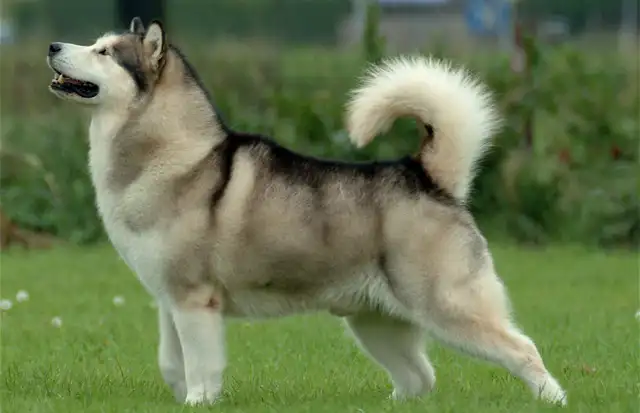
With a powerful, sturdy build and a strikingly wolf-like appearance, the Alaskan Malamute is a breed that commands attention. Their thick double coat, erect ears, and plumed tails contribute to their majestic presence. These dogs are built for endurance, with well-developed muscles and a deep chest, reflecting their heritage as sled dogs.
Other Names
The Alaskan Malamute, often referred to simply as “Malamute,” is also affectionately known by its nicknames such as “Mal,” “Mally,” or even “Gentle Giant.”
Pronunciation
The pronunciation of “Alaskan Malamute” is commonly heard as “uh-LAS-kuhn MAL-uh-myoot.”
Temperament
Renowned for their friendly disposition and loyalty, Alaskan Malamutes make excellent companions for families and individuals alike. While they are generally affectionate and good-natured, they also possess a strong independent streak and may exhibit stubbornness at times. Early socialization and consistent training are crucial to channel their intelligence and energy positively.
Height, Weight
Alaskan Malamutes are large dogs, with males typically standing between 24 to 26 inches at the shoulder and weighing between 85 to 100 pounds. Females are slightly smaller, usually measuring 22 to 24 inches in height and weighing between 75 to 85 pounds.
Health Problems
Like all breeds, Alaskan Malamutes are prone to certain health issues, including hip dysplasia, progressive retinal atrophy (PRA), and inherited polyneuropathy. Responsible breeders conduct health screenings to minimize the risk of these conditions, but prospective owners should be aware of potential health concerns and provide appropriate veterinary care.
Living Conditions
Despite their Arctic heritage, Alaskan Malamutes can adapt to various living environments, including apartments, as long as they receive adequate exercise and mental stimulation. However, they thrive best in homes with spacious yards where they can roam and play freely.
Exercise
As highly active dogs, Alaskan Malamutes require plenty of exercise to maintain their physical and mental well-being. Daily walks, hikes, or runs are essential to satisfy their need for activity. Engaging in activities such as sledding, backpacking, or agility training can also help fulfill their instinctual desire to work.
Life Expectancy
On average, Alaskan Malamutes have a lifespan of 10 to 14 years when provided with proper care and nutrition.
Litter Size
Alaskan Malamute litters typically range from 4 to 8 puppies, although larger or smaller litters are possible.
Grooming
With their dense double coat, Alaskan Malamutes shed profusely, especially during seasonal changes. Regular brushing is necessary to minimize shedding and prevent matting. Additionally, routine grooming, including nail trimming, ear cleaning, and dental care, helps maintain their overall health and hygiene.
Origin
Originating from the Arctic regions of Alaska, the Alaskan Malamute is one of the oldest sled dog breeds, valued for its strength, endurance, and versatility in pulling heavy loads over long distances. Bred by the native Inuit people, these dogs played a crucial role in transportation and survival in harsh climates.
Group
The Alaskan Malamute is classified as a working breed by major kennel clubs, including the American Kennel Club (AKC) and the United Kennel Club (UKC).
Recognition
The breed is recognized by various canine organizations worldwide, including the AKC, UKC, and the Fédération Cynologique Internationale (FCI).
By delving into each aspect of the Alaskan Malamute’s characteristics and history, we can appreciate the unique qualities that make this breed a beloved companion and a fascinating piece of canine heritage. Whether as a loyal family pet or a skilled working partner, the Malamute continues to capture hearts with its majestic presence and gentle demeanor.
References:
- https://en.wikipedia.org/wiki/Alaskan_Malamute